October is National Disability Employment Awareness Month, so we'll be focusing on ways to stay healthy, happy, and successful in the workplace. No matter where you work, there are basic social rules you should follow to have the best relationships with the people you work with. Email and other virtual communications also involve some unwritten rules to follow to ensure you communicate effectively.
Punctuality Matters
- Arriving on time for work is crucial because it conveys the effectiveness of your time management skills to your coworkers and supervisors. Certain companies have daily morning meetings at the beginning of their workdays, meaning that punctuality can help these meetings start on time. This etiquette reinforces your reliability and demonstrates your respect towards your coworkers and work.
- Unexpected circumstances may occur that cause you to be late for work. Such instances are understandable as long they're an occasional occurrence and not a recurring one. For example, suppose you use public transportation to go to work. If you notice you're continuously arriving late, consider leaving your place of residence earlier to compensate for any public transport delays. Supervisors typically appreciate an employee that comes to work early.
Greet Others Politely
- Consider politely greeting your coworkers or customers with a "good morning" or "good afternoon" and a smile. Ensure you're making eye contact with people, calling them by their name, and taking the initiative of introducing yourself to new coworkers.
- When you present a friendly demeanour in your workplace, it can help others feel more comfortable, which may encourage them to ask you for assistance or advice.
Keep the Workplace Clean
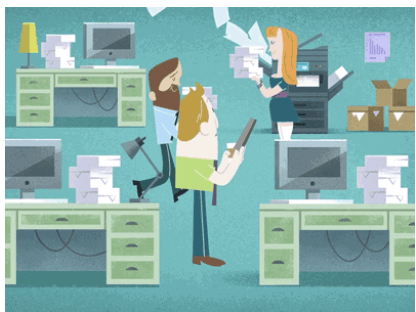
- Offices and cubicles provide an opportunity for you to create a dedicated personal space. Even though most companies are typically flexible about what their employees place on display in their work areas, consider minimalism and cleanliness.
- Avoid overcrowding your office and instead strive to keep personal items to a minimum, as that can help your work area stay clean and neat. Consider how your coworkers and supervisors may react to the possessions you display by ensuring these items are work-appropriate.
- It can also be helpful for your career, and work relationships to extend this office etiquette to your overall workplace, which means that it's vital to be mindful of how you use communal areas. For example, most companies have a break room where employees can store foods in the refrigerator, use dishware, and make tea and coffee. When you use these amenities, ensure you clean after yourself and respect the possessions of others.
Lunch/Break Locations
- Most businesses have a designated lunchroom or cafeteria for their employees to eat. Consider going to these designated areas or outside restaurants or food courts during your lunchtime and other breaks you may have.
- By leaving your office or cubicle, you gain an opportunity to relax, which is beneficial for your mental state and motivation. This can also help you refocus once you return to your workplace.
Dress Appropriately
- Dress codes can vary depending on the industry of your workplace, but it's customary to strive for modesty and respect for what you wear. For example, even if your office encourages employees to wear casual attire, selecting semi-casual, simple, and comfortable clothing is appropriate. This dress code also includes other factors such as perfume and general hygiene.
- Most companies establish a dress code as part of their employee manual. You can refer to this manual or consider contacting human resources for more information about a company's acceptable work attire. It can also help to observe what your coworkers are wearing for further clarification of your workplace's dress code standards.
Use Professional Language
- When contacting clients or supervisors, writing concisely, professionally, and respectfully demonstrates the importance and care you place in crafting emails. It reflects a level of professionalism that can help you nurture significant work relationships.
- Consider keeping this professional tone at all times to establish personal consistency, but you may use a more casual style or vocabulary when contacting a coworker you know well. It's usually more professional to avoid slang and emojis.
Proofread Your Emails
- After drafting your email, it's vital to proofread its content before clicking send. This action allows you to check your grammar, the tone of your email, ensure the spelling of the recipient's name is correct, and that your intent is clear and easy to understand
- If possible, it can help to read your email aloud to gain a better understanding of how your recipient may read it.
Responding to Emails
- It’s courteous to respond by the end of the day, if possible, but not longer than 24 hours. You don’t want to leave people hanging.
- Avoid using ‘reply all’ – if it doesn’t pertain to all. It only adds to the bulk of a busy person’s Inbox. A response is generally needed by only the sender, who will summarize and send results to the group.
- Acknowledge the email even if you can’t send the requested information right away. Send a quick response that you’re working on it and when you expect to have the information to the sender.
- Stay on subject. Respond to the topic of the email, but avoid introducing a new subject in the same email thread. Start a new email instead.
Don’t always respond to an email with another email. Sometimes, it’s best to pick up the phone instead or have a face-to-face meeting if the tone or topic of the email is emotional, terse, or needs a lengthy discussion.
SOURCE: https://ca.indeed.com/career-advice/career-development/etiquette-in-workplace
https://ca.indeed.com/career-advice/career-development/etiquette-in-workplace