
Welcome to the Positive Pulse blog! Check in with us each month for tips on healthy living, right on our website. A short snippet will be featured in the Positive Pulse monthly newsletter as well, which you can sign up for here.
We're back this month with some more tips on healthy living; this time it’s all about biking! There are many physical benefits to riding a bicycle that make it well worth adding to your daily routine. It can also save you money on transportation and other budget concerns. Though biking is a generally safe activity, you must be sure to follow basic safety guidelines to keep yourself out of harm's way. If you think physical issues may stop you from riding a bicycle, you may find a solution with adaptive cycling! Click here to learn more about available options.
It's Easy on the Joints
When you sit on a bike, you put your weight on a pair of bones in the pelvis called the ischial tuberosities.
This is unlike walking, when you put your weight on your legs. This makes it good for anyone with joint pain or age-related stiffness.
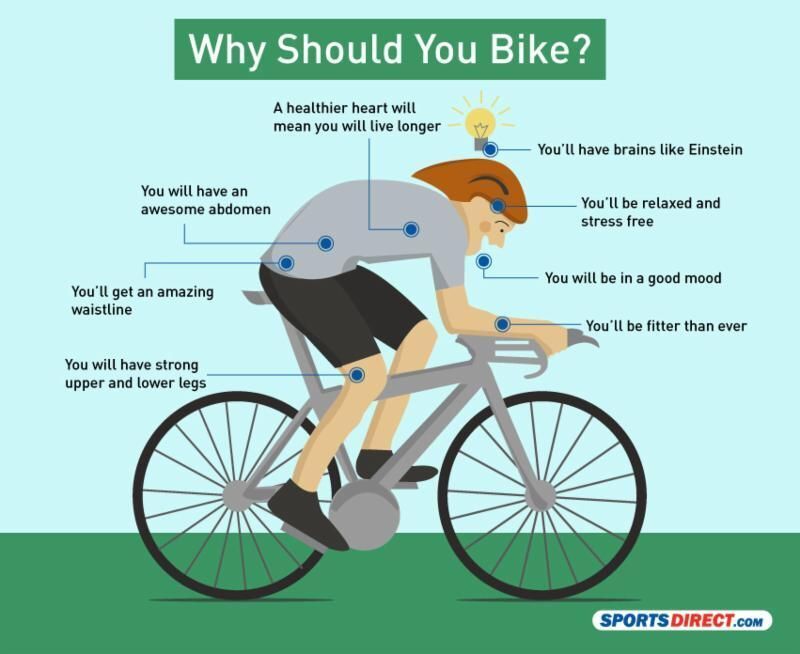
Cycling Builds Muscle
In the power phase of pedaling (the downstroke), you use the gluteus muscles in the buttocks, the quadriceps in the thighs, and the gastrocnemius and soleus muscles in the calves. In the recovery phase (backstroke, up-stroke, and overstroke), you use the hamstrings in the back of the thighs and the flexor muscles in the front of the hips. You use abdominal muscles to balance and stay upright, and you use your arm and shoulder muscles to hold the handlebars and steer.
It Helps In Other Areas Too
Resistance activities, such as pushing pedals, pull on the muscles, and then the muscles pull on the bone, increases bone density. The benefits of riding carry over to balance, walking, standing, endurance, and stair climbing. It will make you a healthier, stronger person overall if you ride regularly.
Biking Costs Less
According to AAA, the average cost for an American driver to own and operate a car was about $8,558 in 2016. In comparison, some estimates put the average cost of owning and operating a bicycle at just $350 a year. Commuting costs using public transportation and ride-share apps also far exceed this estimated cost of using a bicycle.
The Four-Mile Rule
Here’s an attainable goal for even the most novice of cyclists. According to a National Household Travel Survey, approximately half of all trips we routinely make by car are to destinations within four miles or less.
Vow to make many (or even all) of those shorter trips by bike — and avoid your normal cost of commuting.
Calculate Your Own Savings
Wonder how much you could save if you commuted by bike or incorporated some cycling into your daily lifestyle? Try this calculator to see!
Choose the Right Equipment
- Helmets
A helmet is a must for safety. In New Jersey, anyone under 17 years of age that rides a bicycle or is a passenger on a bicycle, or is towed as a passenger by a bicycle must wear a safety helmet. It is wise to still wear a helmet at any age! - Cycling Clothes
These have high-tech fibers that wick away moisture. They are usually neon-colored, with reflective material so you'll be visible to drivers. Bike shorts have a thick pad or chamois to prevent chafing and provide cushioning. - Bikes
Look for one that puts less stress on your body, such as a beach cruiser or comfort bike. They have high-rise handlebars that enable you to sit upright, wide tires for a smooth ride, shock-absorbing seat posts, and low top tubes so you don't have to swing your leg too high to mount the bike. If mounting a bike is difficult, there are even "step through" bicycles that feature top tubes just six inches off the ground. Other bike types include tricycles, which are helpful if you are less stable on your feet, and recumbent bikes that allow you to lean back and ride. - Saddle
Get one with extra padding that's wide enough to support you. Pressure-relieving saddles may have a "noseless" or horseshoe design.
RESOURCES:
https://www.health.harvard.edu/staying-healthy/the-top-5-benefits-of-cycling
http://cyclingthe50.com/
https://www.aarp.org/money/budgeting-saving/info-2017/save-money-bike-commuting.html
https://www.nhtsa.gov/road-safety/bicycle-safety
https://www.health.harvard.edu/staying-healthy/the-top-5-benefits-of-cycling